
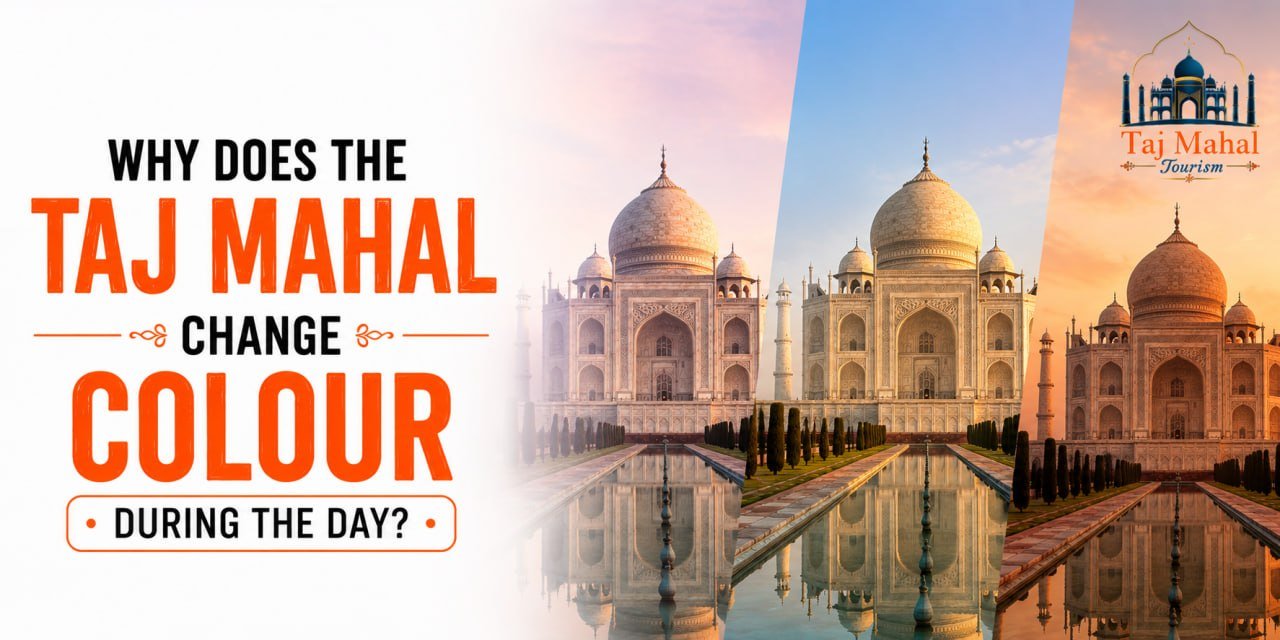
Stand in front of the Taj Mahal at sunrise, then return at noon, then again at sunset, and you would swear you were looking at three completely different buildings. The soft pink glow of early morning gives way to a blinding white by midday before settling into a warm golden hue as the sun dips low. It is one of the most talked-about quirks of this monument, and yet most visitors never quite understand why it happens.
It All Comes Down to the Marble
The secret lies entirely in the material Shah Jahan's architects chose nearly four centuries ago. The Taj Mahal is built of white marble from Makrana in Rajasthan, a slightly translucent stone and not flat and opaque like most building materials. Because of this translucency, marble doesn’t just reflect light off its surface, but absorbs some light as well, allowing the stone to pick up subtle changes in the surrounding atmosphere throughout the day.
Morning: The Pink Phase
At dawn, sunlight has to travel through more of the atmosphere to reach the ground, scattering away the shorter wavelengths and leaving the warmer, redder ones. This soft, diffused light hits the marble at a low angle giving the entire structure a gentle rosy or pinkish hue. That’s why photographers specifically chase this window because the effect only lasts for a short stretch after sunrise before the light shifts and the colour fades.
Midday: The Stark White Shift
By late morning and into the afternoon, the sun sits almost directly overhead, and its light hits the marble at a much steeper angle. Combined with the fact that midday sunlight is far more intense and less filtered by atmospheric particles, the marble reflects it in a sharp, almost blinding white. This is the version most tourist photographs capture, largely because midday happens to be when most visitors arrive, not necessarily because it is the most flattering light.
Evening: Back to Warm Tones
As the sun begins descending again, the same scattering effect from sunrise repeats itself in reverse. Longer, warmer wavelengths dominate the light once more, and the marble responds by taking on a golden, almost amber quality. Many photographers argue this version rivals sunrise for sheer visual drama, particularly because the golden tone contrasts beautifully against a darkening sky.
A Popular Myth Worth Mentioning
There is a romantic theory floating around that the colour changes were designed deliberately to mirror the emperor's changing moods, sorrow at dawn, strength at noon, and love at dusk. It is a lovely story, and it fits neatly with the Taj Mahal's broader narrative of grief and devotion, but no solid historical documentation actually supports it. Most historians agree that the effect is simply a natural byproduct of the marble's properties rather than an intentional design choice.
Timing Your Visit Around This Effect
For travellers who want to witness all three colour shifts in a single trip, timing becomes everything. A rushed midday visit alone only shows one version of the monument, missing the far more atmospheric sunrise and sunset windows entirely. tajmahaltourism.com structures its day trips specifically around these lighting changes, building in sunrise entry along with enough flexibility to catch the golden hour before departure so visitors are not left guessing when the best light will actually happen.
The Bottom Line
The Taj Mahal's shifting colours are not a trick of paint or design, they are a quiet result of marble, light, and atmosphere working together across the course of a single day. Understanding why it happens does not take away the magic, if anything, it makes standing there and actually watching it unfold feel a little more remarkable.
© 2017 Garhwal Himalayan Expedition. All rights Reserved. Developed by ehub.