
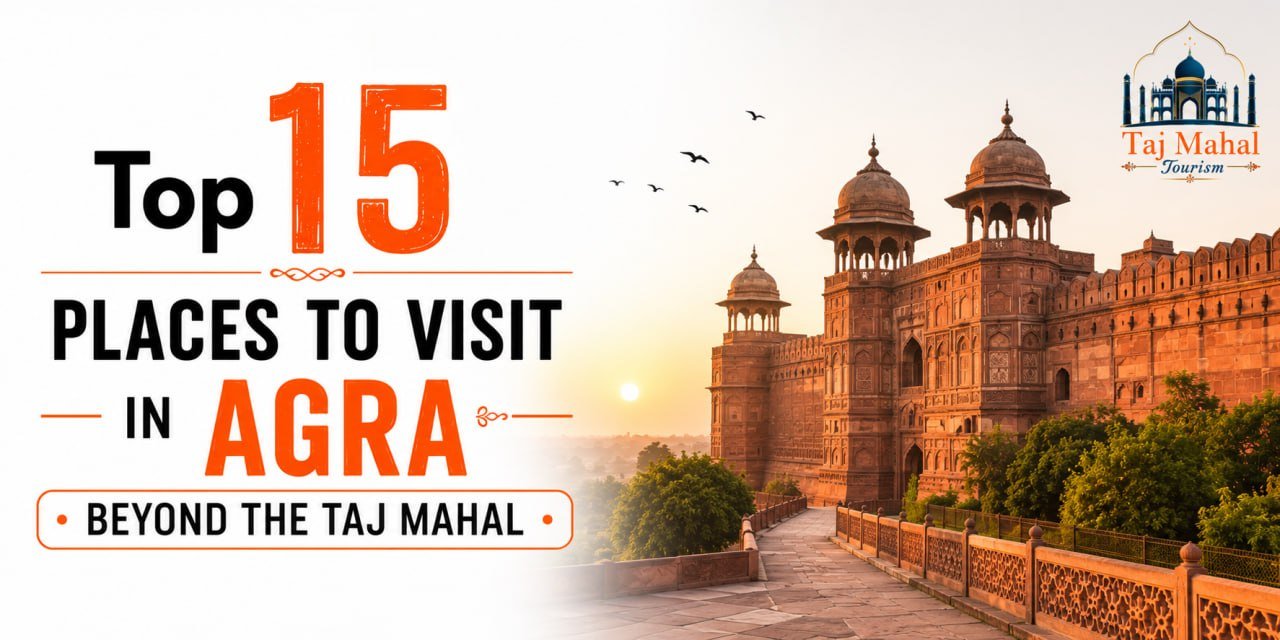
Most travellers land in Agra, spend a couple of hours at the Taj Mahal, snap the obligatory photos, and head straight back out, convinced they have seen what the city has to offer. That is selling Agra short. Centuries of Mughal history sit scattered across forts, tombs, and old markets that never make it onto the standard tourist checklist. If you can spare an extra day, here is where that time actually pays off.
Agra Fort
This sprawling red sandstone fortress once housed Mughal emperors before the seat of power eventually moved to Delhi. It also happens to be where Shah Jahan lived out his final years under house arrest, reportedly watching the Taj from a distance through a small window across the river.
Itmad ud Daulah's Tomb
Locals often call this the Baby Taj, and it actually came before the Taj Mahal itself, likely shaping parts of its eventual design. The marble inlay work rivals the main attraction in detail, minus the tour buses and crowds.
Mehtab Bagh
Positioned directly opposite the Taj across the river, this garden delivers one of the clearest, unobstructed views of the monument anywhere in the city, especially breathtaking as the sun sets and the marble catches its final glow.
Fatehpur Sikri
About forty minutes outside Agra sits this deserted Mughal capital, frozen mid-story. Palaces, courtyards, and mosques built entirely from red sandstone still stand, abandoned not long after construction once water supplies ran dry.
Akbar's Tomb, Sikandra
Fewer tourists make it here, which is a shame given how architecturally distinct it is. Built for Emperor Akbar, the design mixes Hindu, Islamic, and Christian elements, mirroring the ruler's famously open approach to faith and governance.
Jama Masjid, Agra
Commissioned by Shah Jahan in honour of his daughter, this ranks among India's largest mosques. Even travellers with no particular interest in religious sites tend to find the sheer scale worth the stop.
Chini Ka Rauza
A quieter tomb that gets overlooked far too often, decorated with glazed tilework rarely found elsewhere in the country. The Persian influence here feels noticeably different from the red sandstone structures dominating the rest of the city.
Guru Ka Tal
Built around a historic stepwell, this gurdwara holds real significance in Sikh history and offers a genuinely peaceful break from the busier, more crowded landmarks nearby.
Kinari Bazaar
Expect chaos, colour, and noise in the best possible way. This local market is where to hunt for textiles, jewellery, and petha, the syrupy sweet that Agra has become famous for producing.
Roman Catholic Cemetery
Among the oldest European burial grounds in Asia, this cemetery makes for an unexpected detour into Agra's colonial and missionary past that most visitors never even know exists.
Wildlife SOS Elephant Conservation Centre
Just outside the city, this rescue facility gives visitors a chance to see elephants recovering from years of abuse, a worthwhile stop for anyone who cares about ethical tourism over the usual sightseeing checklist.
Dayal Bagh Temple
Construction on this marble temple has stretched past a century and still is not finished, yet the craftsmanship already on display rivals the Taj Mahal, funded entirely through community contributions rather than the royal treasury.
Mankameshwar Temple
Believed to predate Agra itself, this is one of the city's oldest Shiva temples, offering a window into the region's history well before Mughal rule ever arrived.
Soor Sarovar Bird Sanctuary
This calm wetland reserve draws birdwatchers, especially during winter when migratory species pass through, a welcome contrast to the density of historical monuments elsewhere in the city.
Sadar Bazaar
Another lively market, better suited for handicrafts and leather goods, with small food stalls scattered throughout, is worth stopping at along the way.
Making the Most of Extra Time in Agra
Fitting all of this into one trip takes real planning, particularly if the Taj Mahal is still on the agenda too. tajmahaltourism.com designs extended Agra itineraries that stretch beyond the typical day trip, weaving in several of these lesser-known stops alongside the main monument, giving travellers the fuller story of the city rather than just its most photographed corner.
Agra tends to reward those willing to slow down and look past the obvious stop. Give it the extra day, and the city rarely disappoints.
© 2017 Garhwal Himalayan Expedition. All rights Reserved. Developed by ehub.