
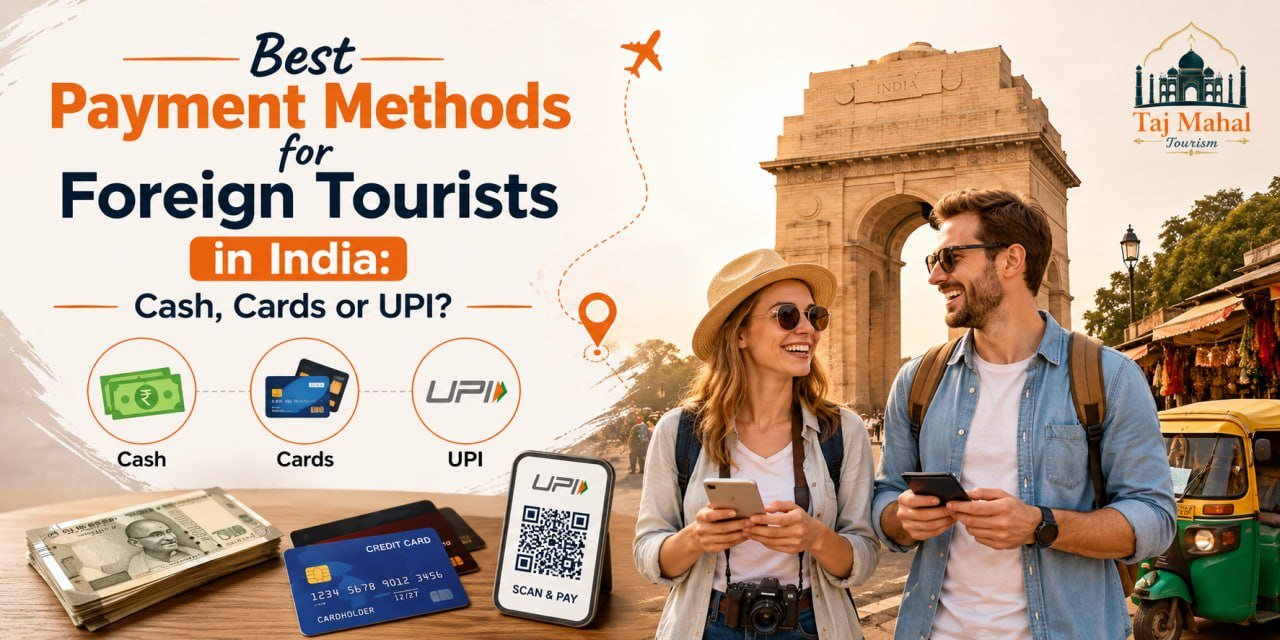
Figuring out how to pay for things is one of those small details that can quietly shape your entire trip. Between markets that only take cash, hotels that prefer cards, and a growing digital payment culture, working out the best payment methods for tourists in India ahead of time saves a fair bit of confusion once you land. At Taj Mahal Tourism, this comes up constantly with visitors planning their Golden Triangle trip, so here's a proper breakdown of what actually works where.
Cash Still Rules in Many Places
India runs on cash more than most first-time visitors expect, especially outside major hotels and malls. Street vendors, small local eateries, rickshaw drivers, and roadside stalls near heritage sites often deal only in rupees, no cards accepted. Carrying a reasonable amount of cash, particularly in smaller denominations, makes daily transactions far smoother. ATMs are widely available in cities like Agra, Delhi, and Jaipur, so topping up cash along the way isn't difficult.
Cards Work Well in Bigger Establishments
Credit and debit cards are accepted comfortably at hotels, restaurants, larger retail stores, and most ticketed attractions. Visa and Mastercard tend to have the widest acceptance across the country. That said, smaller shops and local markets frequently skip card machines entirely, so relying on cards alone can leave you stuck more often than you'd like. It's worth checking with your bank about foreign transaction fees before you travel, since these can add up quickly on longer trips.
UPI Has Changed the Game, Sort Of
Unified Payments Interface, or UPI, has become the backbone of everyday transactions across India, used by everyone from taxi drivers to fruit sellers. For foreign tourists, UPI access isn't always straightforward, since it typically requires an Indian bank account or a linked Indian phone number. Some newer international UPI options have started rolling out for visitors from select countries, so it's worth checking current eligibility before your trip, as rules here shift fairly often.
Currency Exchange Tips Worth Knowing
Exchanging currency at the airport tends to come with weaker rates compared to authorised money changers in the city. Look for licensed exchange counters, and always ask for a proper receipt. Avoid street-side currency exchange offers that seem too convenient, they rarely work out in your favour and carry unnecessary risk.
The Wise Move Is to Diversify Payment Methods
It’s better to carry a mix than to bet on one single method. Keep cash for small vendors and local transport, a card for hotels and larger purchases, and if your bank allows international linking, consider setting up UPI access. This combination has you covered for most situations without leaving you scrambling at the wrong time.
Safety While Travelling Around Money
Don't put all your cash in one bag, spread it over different bags. If travelling internationally, tell your bank your travel dates in advance so card transactions don’t get flagged or blocked unexpectedly. Keep a little emergency cash stash tucked away separately, in case you lose a card or an ATM is not cooperating.
It’s Easier to Book with a Reputable Travel Partner
A lot of payment stress disappears when major expenses like accommodation, transport and guided tours are arranged ahead of time. Taj Mahal Tourism handles bookings and coordination for travellers across the Golden Triangle circuit, meaning fewer situations where you're caught without the right payment method on hand at the wrong moment.
Final Thoughts
There isn't one single winner when it comes to the best payment methods for tourists in India, cash, cards, and UPI all play a role depending on where you are and what you're paying for. Carrying a sensible mix, staying alert to acceptance gaps in smaller markets, and planning currency exchange properly makes the financial side of your trip far less stressful. For travellers heading to see the Taj Mahal or exploring the wider region, Taj Mahal Tourism helps take the guesswork out of logistics, so you can spend more time enjoying the trip and less time worrying about how you're going to pay for it.
© 2017 Garhwal Himalayan Expedition. All rights Reserved. Developed by ehub.